


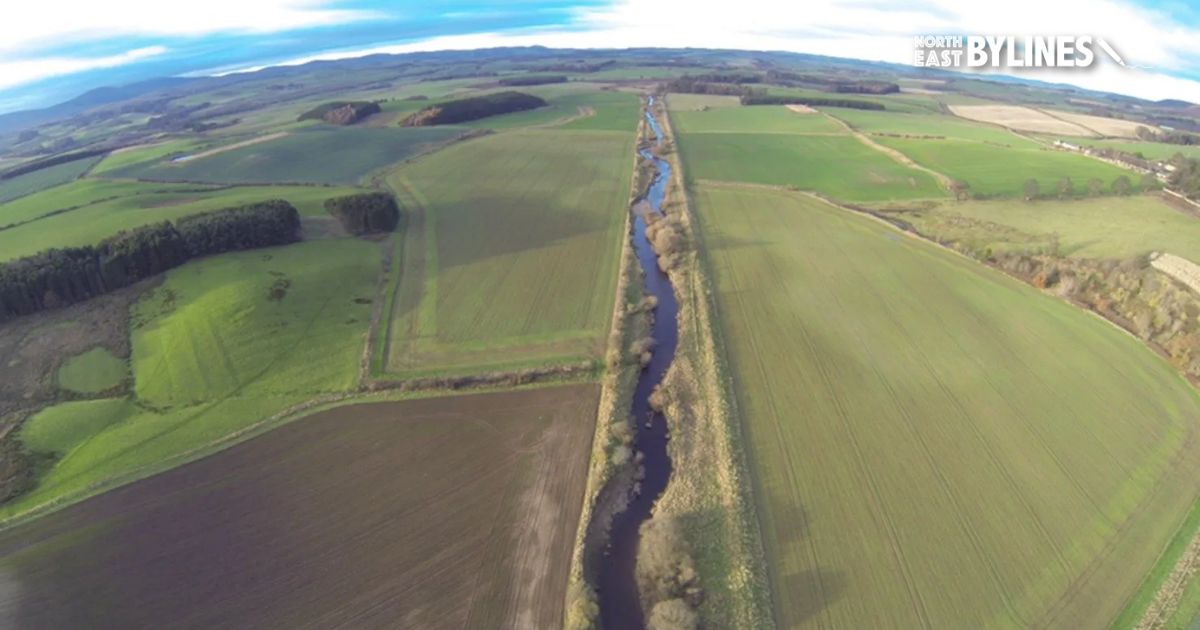
One of the largest river restoration projects ever seen in the UK is now under way in Northumberland. The River Breamish, in the north of the county, has seen its path straightened over “many centuries” to make way for intensive farming.
This has meant the river has “disconnected” from its floodplain, reducing freshwater species and increasing flood risk. The new project aims to reinstate the “meandering” river system to the lower Breamish Valley.
The project is being led by the LIFE WADER nature-recovery project in partnership with the Environment Agency, Tweed Forum, Natural England and local landowner, Harehope Estate. Organisers say the work will bring “huge benefits for wildlife, ecology and man”.
It forms a key element of the River Till Restoration Strategy. The River Till, a tributary of the Tweed, is home to a number of protected species including otter, Atlantic salmon, as well as river, brook and sea lamprey.
Rewiggling
How to Rewild, a hub for advice on rewilding, describes the process of restoring a river’s original course as “rewiggling”. It states that this can be achieved by digging out a new course parallel to the old one that winds across the original floodplain.
When rivers are disconnected from their floodplain, flood risk downstream is increased and cause poorer water quality. Past landowners tried to reduce local flooding by straightening rivers, but How to Rewild say this was based on a “misunderstanding” of river systems.
Water may flow faster in a straighter, deeper channel – but a “wiggly” river has more storage capacity due to bends and floodplains.
Furthermore, a straightened river means that species must either cling to the riverbed or swim quickly to survive. However, in a more natural watercourse, there is a mix of fast and slow-flowing water, allowing for greater biodiversity.
LIFE WADER comment
LIFE WADER Project Manager, Liz Humphreys, said: “Sadly UK rivers are in crisis – with only 14% nationally in good ecological health. Our rivers have been deteriorating for a long time through intensive management and manipulation.
“Flood embankments, dredging, channel straightening and weir-creation have all reduced floodplain connectivity, removed habitats and obstructed the passage of migratory fish. By taking our cues from nature we can restore natural processes and habitats and bring the river ecosystem back into a state of balance.
“This ambitious project will be one of the biggest of its kind in England and we, as part of a collaborative partnership, are excited to be on the vanguard. By working closely at the catchment-scale with the Environment Agency and Tweed Forum as well as the landowner and stakeholders we can accelerate progress toward a sustainable balance between land use and nature-recovery for the long term.”
The restoration projects
The Breamish restoration concept has been in development since 2019, with the planning application approved in 2024. Contractors have been appointed and the major construction works began in late May.
Work will include excavation and diversion of the river into an historic channel, installation of silt traps, shallow ponds, wetlands, embankment breaches and the construction of woody dams.
It is hoped work will be complete by late summer 2025. The scale and ambition of the project will be showcased in a film released next year.
The LIFE WADER project is a five-year £5.8m nature recovery project co-funded by the European Union, due for completion in December 2026. WADER (Water and Disturbance Environmental Restoration) is led by Natural England. It brings together a range of experts to improve the ecological condition of more than 49,000 hectares of river, coastal and marine habitat and improve water quality within the River Tweed catchment and along the Northumberland Coast.
Jim Heslop, environment programme manager for the Environment Agency in the North East, added: “This exciting project will help return the River Breamish to a dynamic, more natural state and bring a variety of benefits for water quality, habitats and biodiversity. We’re working with the natural processes of the river to bring it back to life.
“This will be one of the largest restoration projects of its kind in the country, ensuring that as well as bringing a boost for wildlife, generations to come can enjoy everything this beautiful river in scenic Northumberland has to offer.”


CLICK HERE TO DONATE TO OUR CROWDFUNDER
HELP US BECOME STRONGER SO THAT WE CAN CONTINUE TO DELIVER POWERFUL CITIZEN JOURNALISM!


link