



Mangroves have become a favored solution in climate and conservation circles. They absorb carbon, blunt storm surge and support fisheries. Funding has followed. Yet outcomes often lag ambition. In parts of Southeast Asia and Latin America, research suggests that roughly 70% of restoration projects struggle to establish healthy forests. Seedlings die. Sites flood incorrectly. Community interest fades.

The problem is not enthusiasm. It is execution.
Much restoration is driven by small, community-based groups with deep local knowledge but limited access to capital, technical advice or long-term support. Catherine Lovelock, a mangrove ecologist at the University of Queensland, points out that success depends as much on social and economic conditions as on planting techniques. Mangroves, she notes, thrive only when tides inundate them for a few hours at a time. Too much water or too little can doom a site. Just as important are land tenure, livelihoods and incentives to protect restored areas once planting ends.
A growing set of nonprofits is positioning itself as an intermediary between funders and communities. One example is Seatrees, which does not run projects directly but backs local partners with funding, scientific guidance, monitoring support and communications. Over the past five years, it has supported mangrove work in places as varied as Kenya, Mexico, Indonesia and Florida, Mongabay’s Marina Martinez reports.
The approach is selective. Seatrees looks for groups that already have experience and local legitimacy but face capacity gaps. Projects must have permission to operate and clear buy-in from communities and Indigenous stakeholders. In Kenya, this has translated into partnerships that combine planting with less visible work: restoring hydrology through trench-digging, maintaining nurseries and paying community members to patrol forests.
Those payments matter. Stipends tied to seedlings are often pooled and reinvested in beekeeping, ecotourism or livestock. Those income streams persist after planting slows, reducing pressure to cut mangroves later. As Leah Hays of Seatrees puts it, communities are “getting paid to do this important work.”
Monitoring is another differentiator. Seatrees tracks seedling survival for at least two years and adjusts tactics when sites falter. In Kenya, Seatrees says, survival rates range from 50-80%, depending on conditions. The organization has also published community surveys that highlight unresolved problems, including ongoing illegal logging. Transparency, even when results are mixed, helps keep partners aligned and funders engaged.
For practitioners, the lesson is practical. Mangrove restoration is not a numbers game. Planting without hydrology, local livelihoods, monitoring and honest reporting is unlikely to endure. The work that matters most often happens after the seedlings go in — and it requires institutions willing to fund patience, not just trees.
Read the full article here.
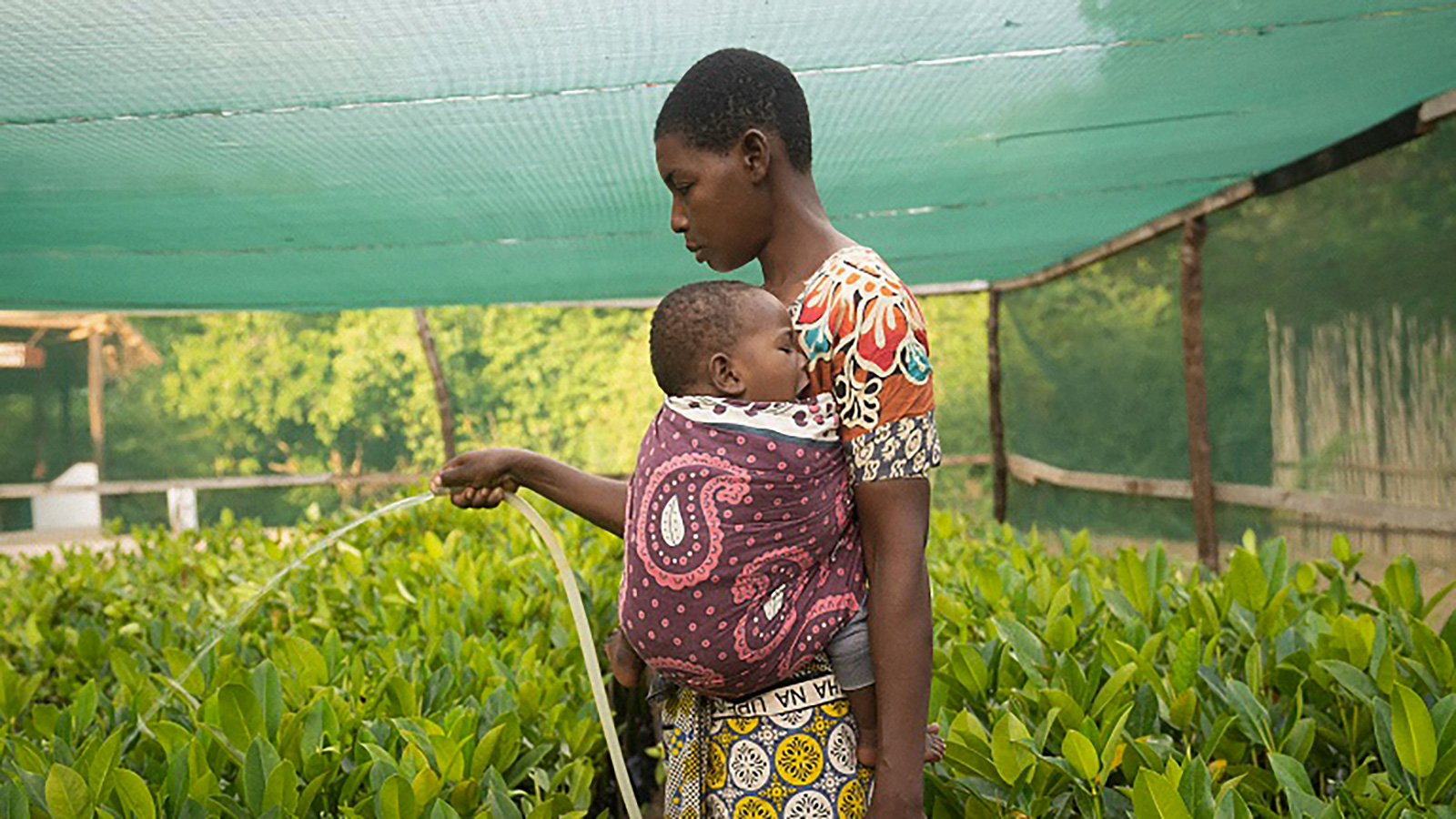
Banner image: A local woman caring for mangrove saplings at Seatrees and COBEC’s nursery in Mida Creek, Kenya. Image courtesy of Seatrees.

link