7 Kitchen Layout Mistakes That Make a Space Feel Small
:max_bytes(150000):strip_icc()/GettyImages-1400043552-6e9e897992c44e3cab4bd1adf083201c.jpg "7 Kitchen Layout Mistakes That Make a Space Feel Small")
A large kitchen isn’t based on square footage alone. You might have ample space on paper, but when you go to unload the dishwasher, there’s not enough room to stand in front of it. Other common issues include glassware cabinets that hit your refrigerator when they open, or an island that doesn’t have enough space behind it to pull up a stool.
These elements determine whether a beautiful kitchen is also a functional one. The deciding factor? A kitchen layout that doesn’t create a cramped feeling. Here, we spoke to designers about seven common mistakes that will make your kitchen feel smaller.
Not Leaving Ample Clearance for Doors
You can have a gorgeous kitchen, but if you don’t think about what it will look like when the cabinet and appliance doors are open, you can end up with tight angles that render certain spaces impossible to use. For example, can you actually stand in front of your range when the oven door is open? Will your corner cabinet door hit the one next to it before it’s fully open?
“Dishwashers placed tight to a corner or island look fine on paper, but once that door opens, the aisle disappears,” says Kristy Salewsky, founder and principal designer of Crew Collective Design. “Clearance matters as much as cabinet styles.”
Going Too Big on the Island
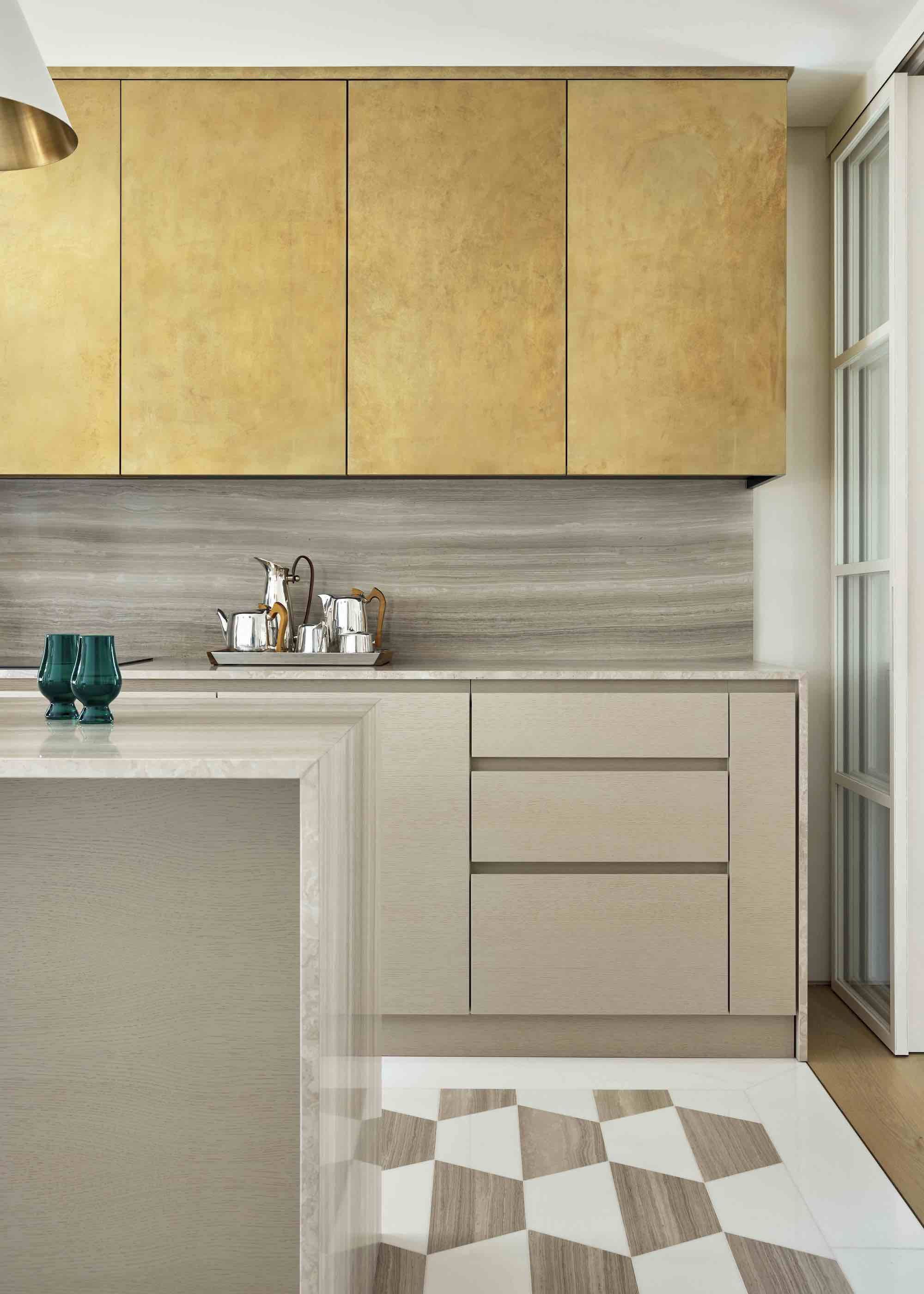
Instagram kitchen inspo is filled with huge islands that have room for seating, prep space, and even a sink or range. These gleaming slabs of stone are gorgeous, but they’re not always practical—particularly if you have an average-sized kitchen. “Bigger isn’t always better. Oversized islands without 42 to 48 inches of circulation create daily discomfort, especially when more than one person is cooking,” says Salewsky.
Forgetting to Leave Space
Marko Rupena / Getty Images
There are a lot of pieces to fit in a kitchen, like appliances, cabinetry, and plumbing. However, you can’t just put them all side by side. There needs to be negative space to make the kitchen functional. “Spacing between the countertops and the island, adequate landing areas next to cooktops and sinks, proper distances between upper and lower cabinets, and correct hood-to-cooktop clearances are where kitchens most often fail,” says Jennifer Beget, founder of J. Beget Designs.
Make sure to leave 36 to 48 inches of space for the flow of traffic around the kitchen, 12 to 15 inches for a landing spot on either side of appliances, and 18 inches between the countertop and the bottom of upper cabinetry.
Not Measuring for Appliances
Buying appliances isn’t as simple as going for a standard size and hoping it will work. There are nuances in sizing, particularly with refrigerators—for instance, buying a standard-depth refrigerator rather than a counter-depth model could leave you wondering why it’s sticking out past your cabinets. It’s critical to measure for the exact appliance you’re ordering, rather than assuming everything is standard.
“A lot of homeowners expect to have a completely flush refrigerator and are disappointed when the door and hinges stick out 6 inches or more from the cabinetry surrounding it,” says Dawn Bane, designer at Spectrum Design Group.
Not Planning for Counter Space
There’s an argument to be made that counter space is even more critical than floor space in a kitchen, and neglecting to account for counter space could leave you with a kitchen that feels smaller than it actually is. This includes planning for counter space around appliances and throughout the entire space, says Sharon L. Sherman, owner of Thyme & Place Design.
“Cookware handles sticking out into walkways are dangerous. At a minimum, 9 inches of counter space should be available when taking something off the stove or out of the oven,” she says. “Roasting pans can get heavy, and walking across the kitchen to set that very hot item down safely is a mistake I often see in kitchens.”
Centering the Sink
John Keeble / Getty Images
Symmetry doesn’t always translate well to a functional kitchen, and it can often cut up a space in a way that makes it feel smaller. Kelly Emerson, senior designer at Aidan Design, sees this often with sinks centered on islands. “It creates equal workspaces, but it’s often better to allow for one side to have greater countertop space,” she says.
Not Prioritizing Range Placement
The range is the star of the kitchen, both in terms of function and design. If you leave its placement until the very end, then you could end up with it feeling squished, which impacts the feel of the entire space. “I see a lot of plans where the range placement clearly came later in the process, so it’s squeezed into a corner or not on a statement wall,” says Michelle Accetta, founder and principal designer of Michelle Accetta Home.
She adds that a well-placed range makes the room feel thoughtfully planned, which can make the space feel larger and more intentional.
link

:max_bytes(150000):strip_icc()/GettyImages-544347092-69d2e73c38f345a7baa16f89d6570186.jpg "This Kitchen Countertop Style Is So 2010s")