Textural Treasures Elevate Kitchen Design
Designers often have a treasure trove of words they use to eloquently describe their projects. One phrase that is mentioned in nearly every conversation these days is texture. Whether it’s smooth or course, visual or tactile – and everything in between – many designers believe that incorporating texture elevates a space and gives it soul.
This month, KBDN asked designers to share some highly textural kitchens, as well as their thoughts about texture and how they are currently including it in their projects.
Variation in Textures
When Ashley Noethe, residential designer for Normandy Remodeling in Hinsdale, IL, considers texture in a kitchen, she often starts by evaluating how much is supplied by the cabinetry selected for the space.
“Cabinetry is the largest element within the room,” she says, “so we build on it, adding or scaling back other textural elements, including things like flooring, tile and countertops, depending on the ‘heaviness’ of the wood’s texture to create a cohesive design.
“Incorporating texture into any space is helpful for catching the eye and giving some visual interest,” she continues. “Texture can also be a way to reinforce a certain design style, to highlight a particular design element or draw attention to a specific area. It becomes especially important in a monochromatic design, or a design that is very neutral or without a lot of detail to break up any monotony.”
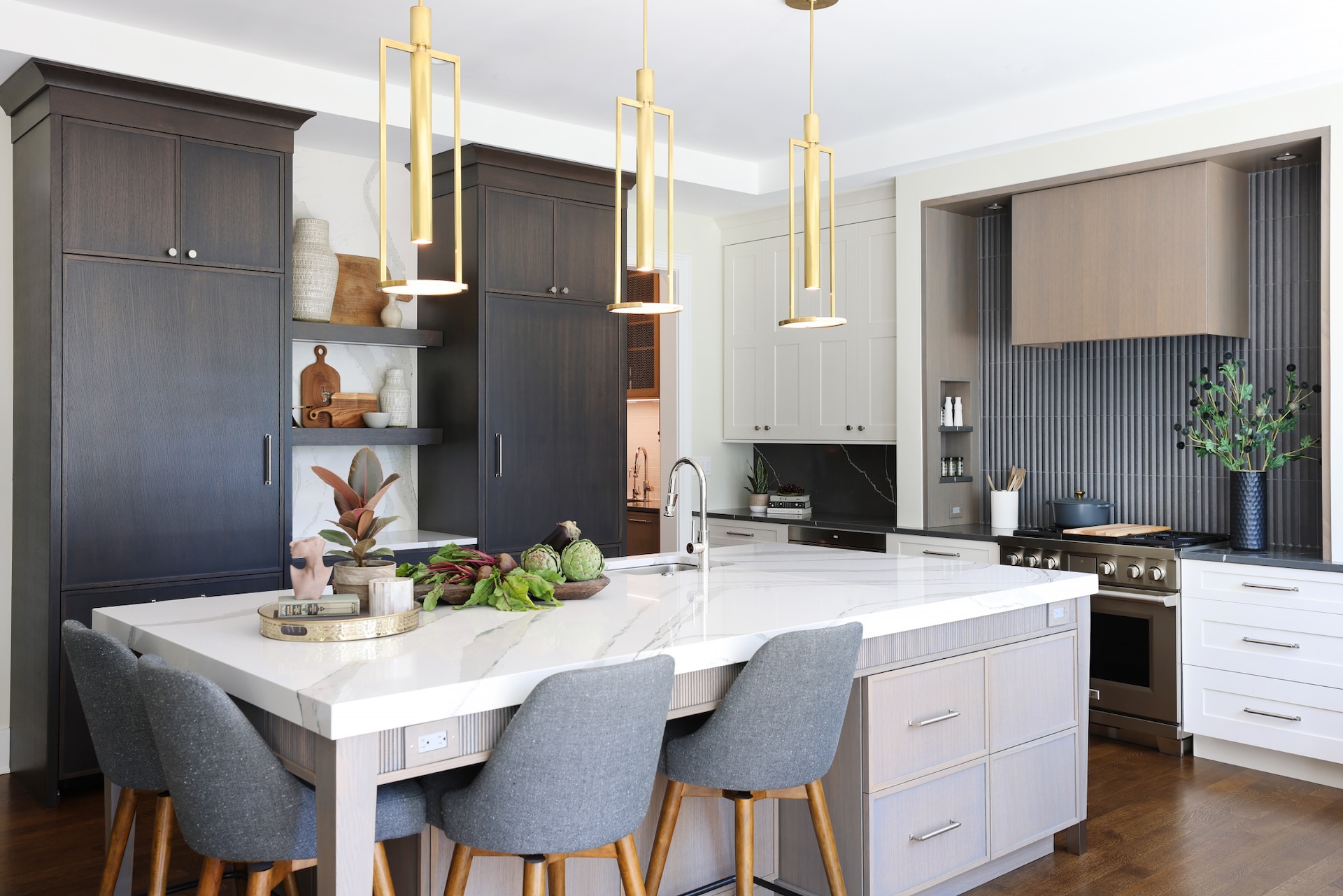
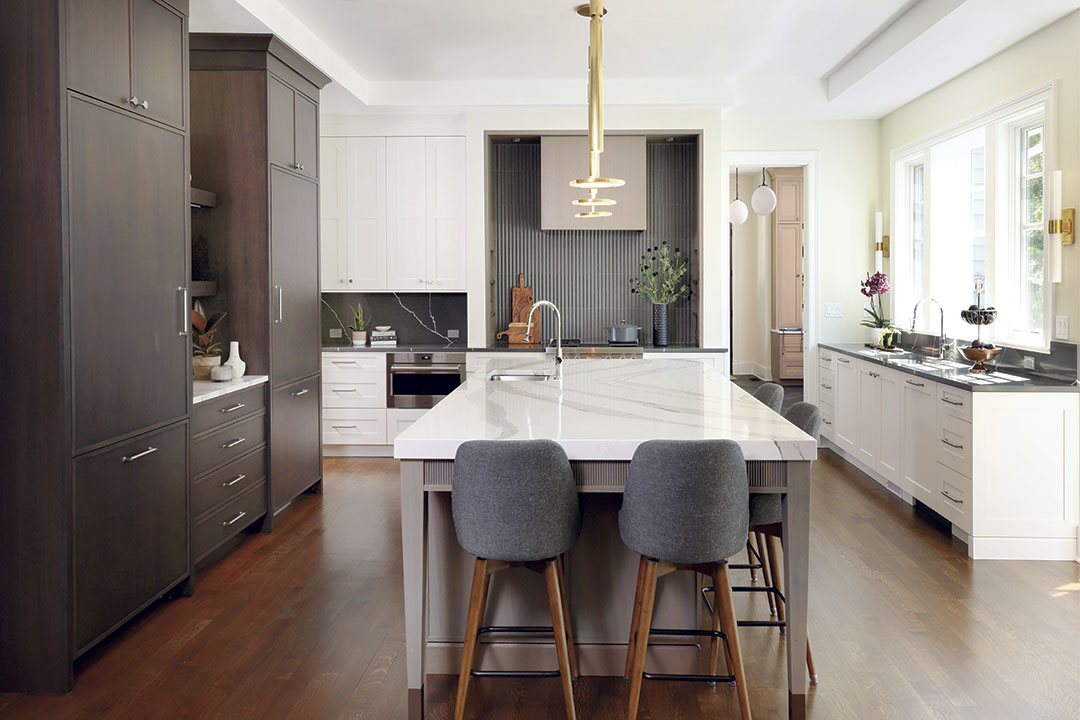
One recent kitchen renovation highlights this philosophy. In this instance, some of the perimeter cabinets and appliance panels are rift-cut white oak with a straight grain pattern that provides ‘quiet’ visual texture through a dark stain. As well, the custom ventilation hood and island base cabinetry are crafted from the same wood species but are stained with lighter, complementary pigments. Noethe contrasted them with cream-colored painted maple cabinets that continue around the kitchen and provide smooth texture.
“Sometimes texture is smooth without a lot of movement,” she explains. “That can be a feature in and of itself. It’s important to have different levels of texture…something that is smooth, something that is a little less smooth, something that is a little rough and something that is very textured. They all create visual interest by not being the same, but playing into each other. So having a variation of textures, as well as different scales and colors, makes a well-executed design look more high-end.”
As she continued building this particular design, representatives from the highly textured category stole the show, especially the dimensional ceramic tile she used as the backsplash behind the range.
“The focal point of the main floor in this home is the kitchen, and when the homeowners see it from their great room, their eyes go straight towards the backsplash that is centered on the range wall,” she relates. “The vertical lines of the tile play off the straight graining pattern in the white oak, but on a larger scale. It’s clean and simple but visually interesting. In addition to the visual texture, the tile also has physical texture because it undulates and ‘moves.’ It’s nice when you can double dip on visual and physical texture!”
Noethe continued the inclusion of highly textured materials on the island where she featured a reeded detail in the apron of the cabinetry.
“It mimics the backsplash tile and ties into the vertical lines of the white oak, but it is a different scale than the wood grain and tile,” she explains. “That keeps it from feeling monotonous or overpowering. It’s about repetition, which creates a cohesive feel.”
Visual and Physical Texture
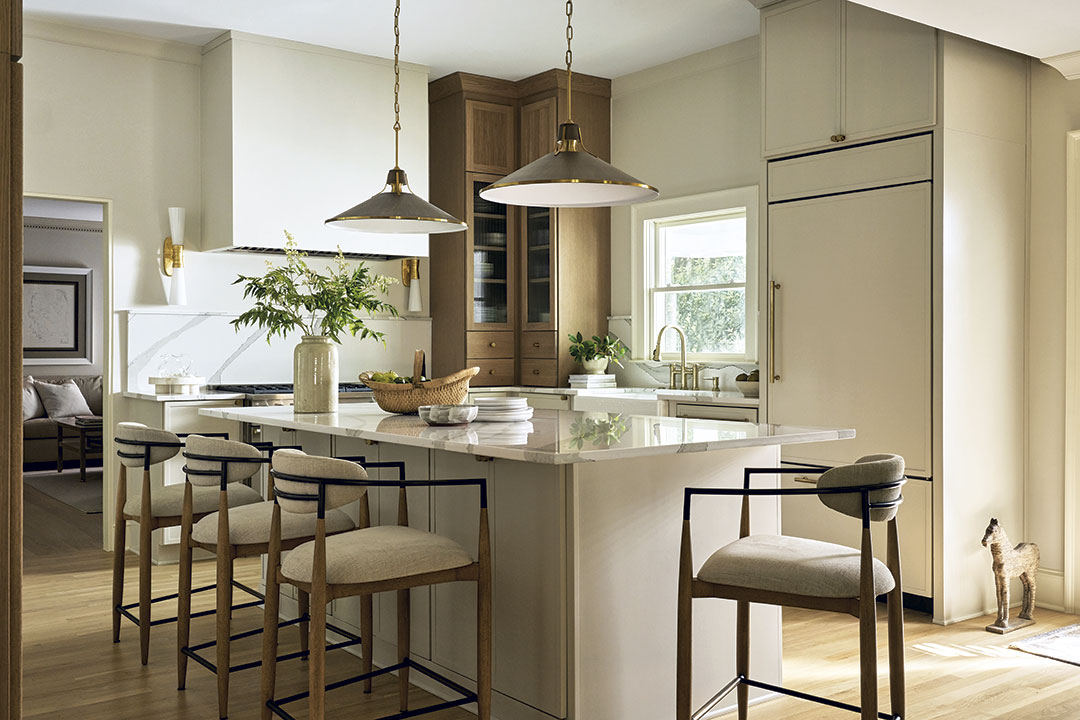
For Brenda Thompson, the value of adding texture to a space is as much about its visual contributions as it is about its physical offerings.
“For me, visually seeing texture is just as important as feeling it,” says the owner/creative director of HouseLift Design in Marietta, GA. “It adds interest to the space and gives your eyes something else to take in, so I always include textural elements that have both visual and physical attributes.”
Those elements often range from something ‘hard’ like a countertop to ‘softer’ additions like baskets, upholstered stools and woven materials. In the former category, Thompson is especially passionate about natural stones, especially marble.
“It’s an exciting time right now because texture is having such a ‘hotspot’ moment,” she relates. “I love that my clients are becoming more comfortable with natural materials like marble. The natural stone may not be as durable or as forgiving as quartz, but it provides a lived-in look that is so beautiful, and I’m excited that more people are embracing it.”
As well, the designer is also seeing greater interest in wood and in finishes like plaster and lime washes.
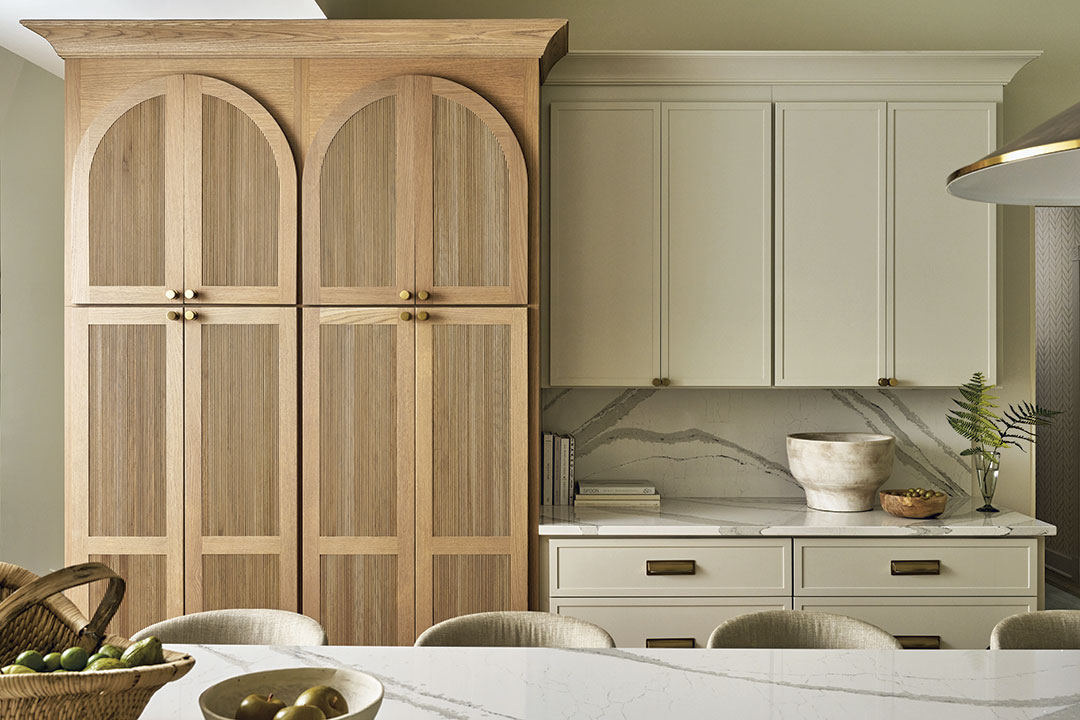
Wood and plaster are predominant textural elements in one recent kitchen renovation project where the designer showcases custom rift-cut white oak and maple cabinetry in a mix of stained and painted finishes to create a warm, yet contemporary, ambiance. Further visual interest is provided by an assortment of brass knobs and pulls that complement the warm tones found in the lighting and plumbing fixtures.
Of special note is a corner countertop cabinet richly stained in a warm hue. It features a combination of reeded glass and reeded wood doors that provide visual and physical texture in addition to what is provided by the wood’s grain pattern. Thompson repeated the reeding in the arched doors of the pantry cabinet sited around the kitchen’s perimeter.
The ventilation hood surround’s plaster construction provides subtle texture while its simple, contemporary silhouette serves as a calming presence that supports the desired modern/transitional design style.
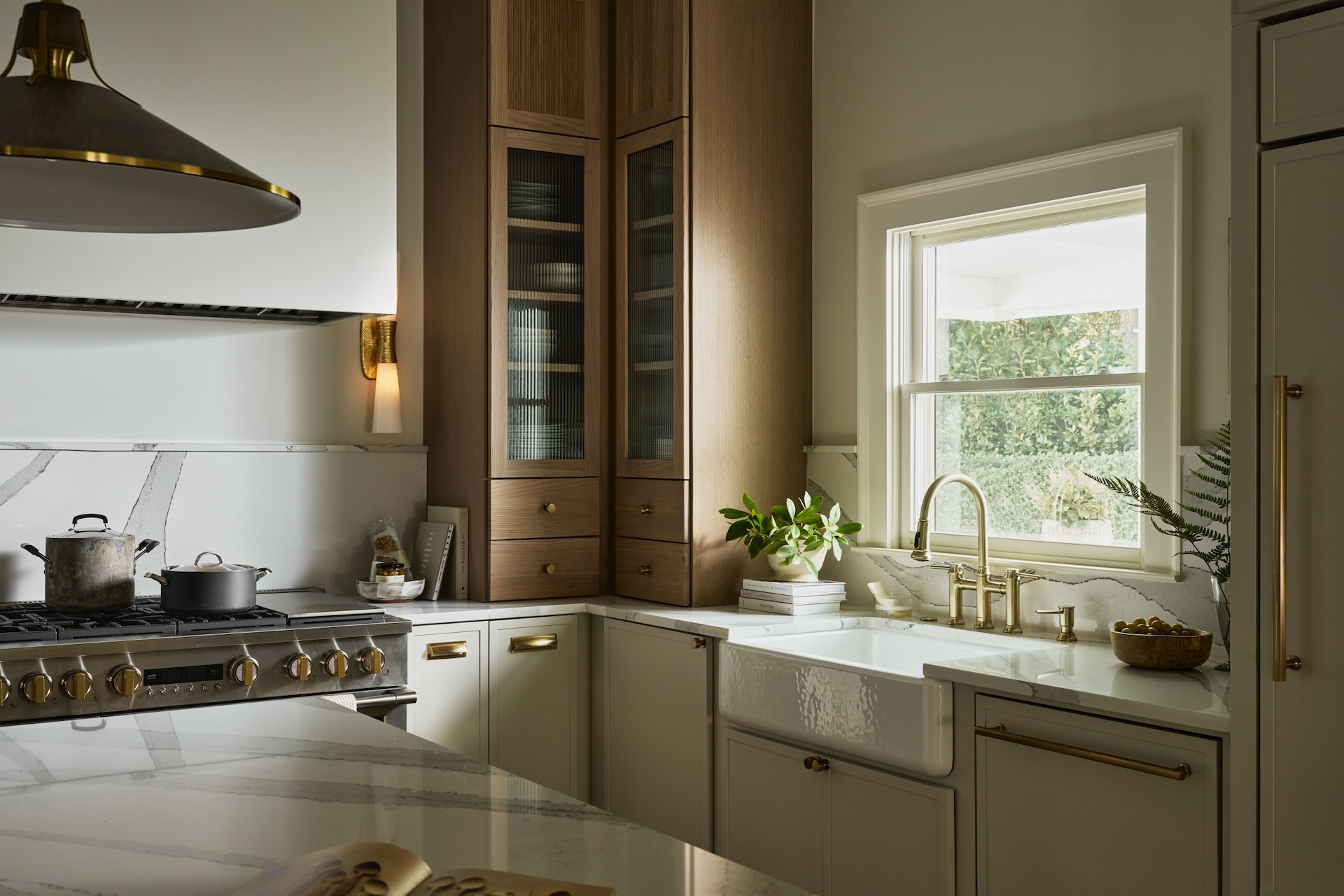
“We purposefully chose to keep the hood simple,” she relates. “There is already a lot of other interest in the space, so we didn’t want to overwhelm it with another shape.”
Additional elements that provide visual and physical texture include a pair of pendant lights above the island that feature cork shades, and a farmhouse sink that has a hammered/dimpled apron front. As well, a petite bar, which formerly was a coat closet, features a backsplash comprised of glazed ceramic tile that boasts a handmade feel.
“The tiles aren’t completely uniform so it provides some interesting texture,” Thompson explains, noting that additional interest is provided by brass railings for the floating shelves. “Overall, this kitchen features a beautiful mix of materials that feel cohesive, yet complement each other…without going too far. You can definitely have too much texture, so it’s important that everything feels balanced.”
A Little Bit of Soul
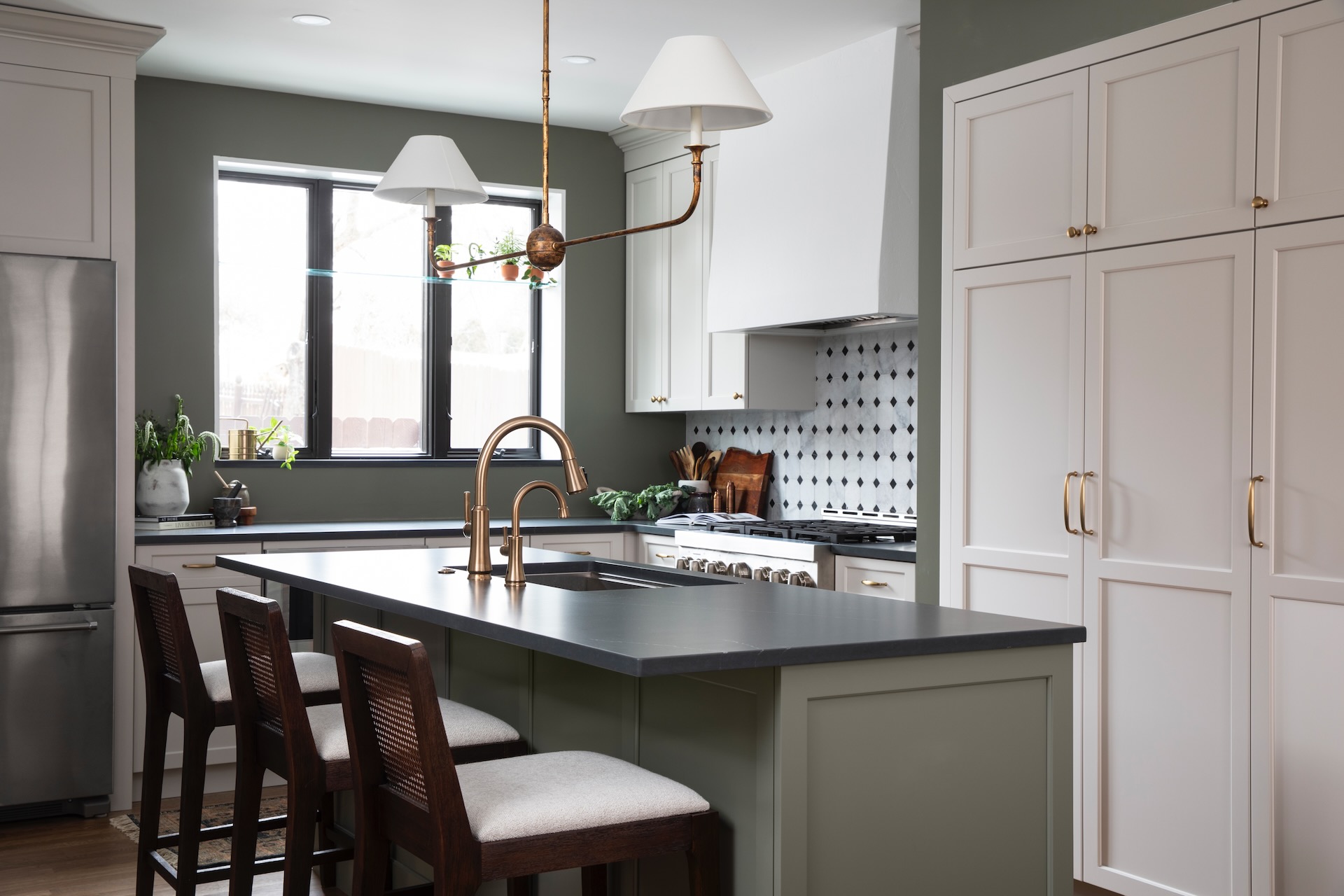
Michael Jacobs believes that texture has the power to elevate a kitchen from functional to soulful.
“A remodel isn’t simply about new materials or a better layout,” says the owner/president of Marvista Design + Build in Pittsburgh, PA. “Rather, by balancing ‘hard’ with ‘soft,’ polished with matte, and new with timeworn, we create spaces that feel cohesive, warm and beautifully lived in. They are a true reflection of our belief that texture makes a home come alive.”
Case in point is a recent renovation where Jacobs and lead designer Lindsay Varhola transformed a dated, compartmentalized kitchen into a warm, inviting and highly functional gathering space that reflects timeless craftsmanship and modern living.
“It embodies our philosophy of creating spaces that strike a beautiful balance between form, function and feeling,” he indicates.
Functionally, removing a half wall opens the kitchen to the dining room, and reworking the layout allows the inclusion of a new pantry. Both improvements create a natural sense of flow and connectivity, without losing the character of the 100-plus-year-old home.
While these improvements establish function, the soul of the kitchen lies in its materiality and textural richness.
“Every decision in this kitchen was intentional,” Jacobs says. “Layering materials and finishes evoke depth, warmth and authenticity. They look like they could have been in the house for a long time. We often work in century-old homes, so we’re very conscious about ensuring a design fits into the existing architecture.”
For example, the island and perimeter cabinetry is topped with quartz, which given its dark color and matte finish, resembles soapstone.
“Its soft, natural presence offers a quiet sophistication that anchors the palette,” he says.
Additionally, a marble mosaic backsplash in contrasting black and white that complements the cabinetry and countertops adds tactile interest and subtle movement with a muted sheen that catches the light just enough to feel alive. The range wall also features a textured plaster ventilation hood that becomes the undeniable focal point.
“The hood is handcrafted, sculptural and timeless,” Jacobs points out. “We’re using a lot more plaster instead of drywall in our designs because it gives so much more depth to a space.”
Brushed brass plumbing fixtures and cabinetry hardware introduce a touch of warmth and vintage-inspired charm, which is further enhanced by the floating wood shelves and table in the adjacent dining space. Their golden metal tone also mixes with the black metal framed window and matte black chandelier above the dining table to create visual interest.
“We love using unique lighting fixtures,” he relates. “They serve as another element that creates depth and texture.
“Texture, in this space, isn’t just a visual detail,” Jacobs continues. “It’s a sensory experience that defines the atmosphere. It softens the architecture, enriches the mood and transforms what could have been purely functional into something deeply livable. Beyond its practical role as a place for cooking and gathering, this kitchen feels like a reflection of the people who inhabit it…comfortable, layered and real.”
Making a Space Memorable
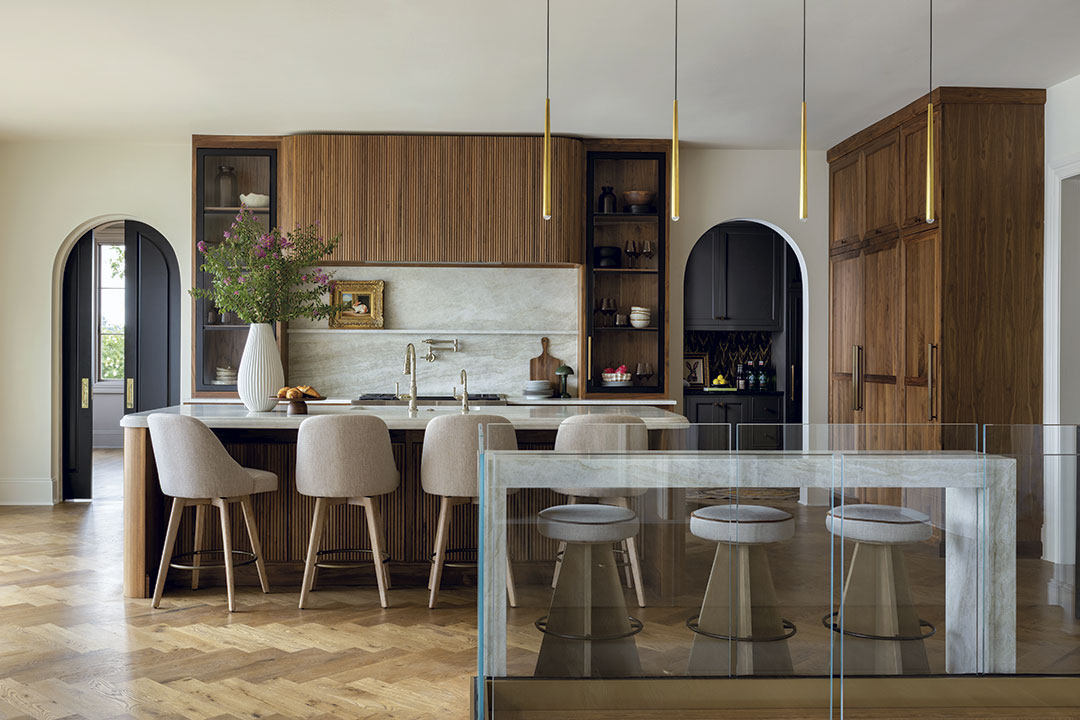
Taylor Walker-Craft welcomes the prominent role that texture currently plays in design.
“I love that texture is taking center stage right now…adding depth, warmth and visual interest to a space,” says the senior designer with Greenbrook Design in Shelby, NC. “It’s what makes a kitchen come to life, and it’s what makes a space feel rich and inviting instead of flat or ordinary. In short, texture gives a kitchen that ‘wow, this feels good’ moment. It turns a pretty space into one that is full of character and feels special every time you walk in.”
The designer is currently excited about including design elements and materials such as rounded islands that create sculptural dimension and reeded cabinet doors that add subtle 3D detail. As well, backlit stone adds a warm, ambient glow while textured walls and ceilings, decorative plaster and ‘material drenching,’ i.e., using a single material across walls, ceilings and furniture, are gaining popularity. Additionally, woven textiles and natural materials with tactile finishes, like wood grain and marble veining, provide richness, warmth and a seamless connection between indoors and nature.
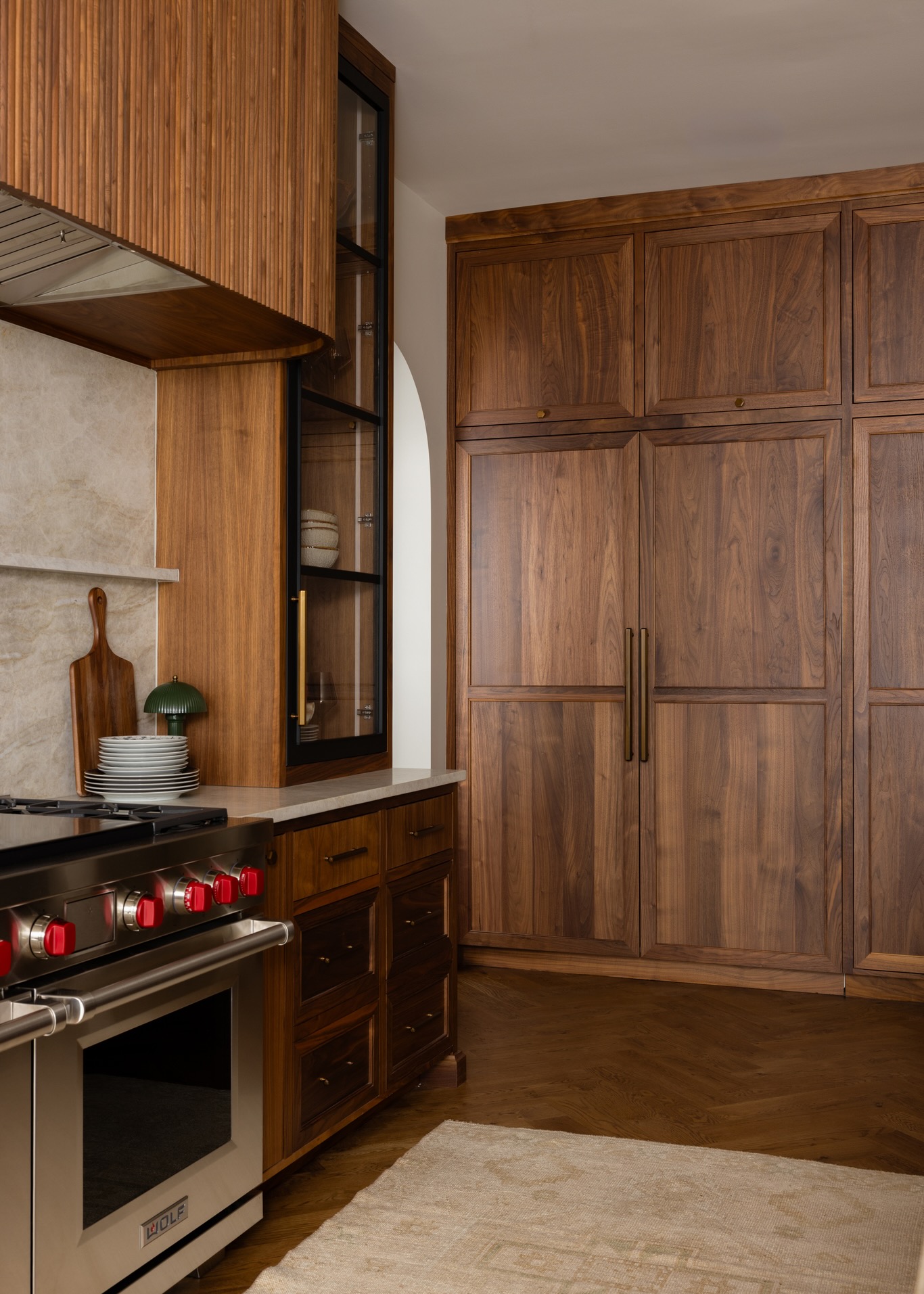
“Mixing different textures adds personality and makes the room feel layered and interesting,” she notes in reference to using multiple textural elements in a space. “For example, a reeded cabinet door, matte metal hardware and a veined quartzite top all play off each other to create depth and balance.”
Such is the case in one recent kitchen renovation where Walker-Craft collaborated with Jody Kurtz and Leah Kleynen at Kathryn Lilly Interiors and Steven Kasay at Kasay Construction to create a modern European kitchen infused with mid-century and Scandinavian influences blended with clean, contemporary lines with warmth, texture and a timeless, inviting atmosphere.
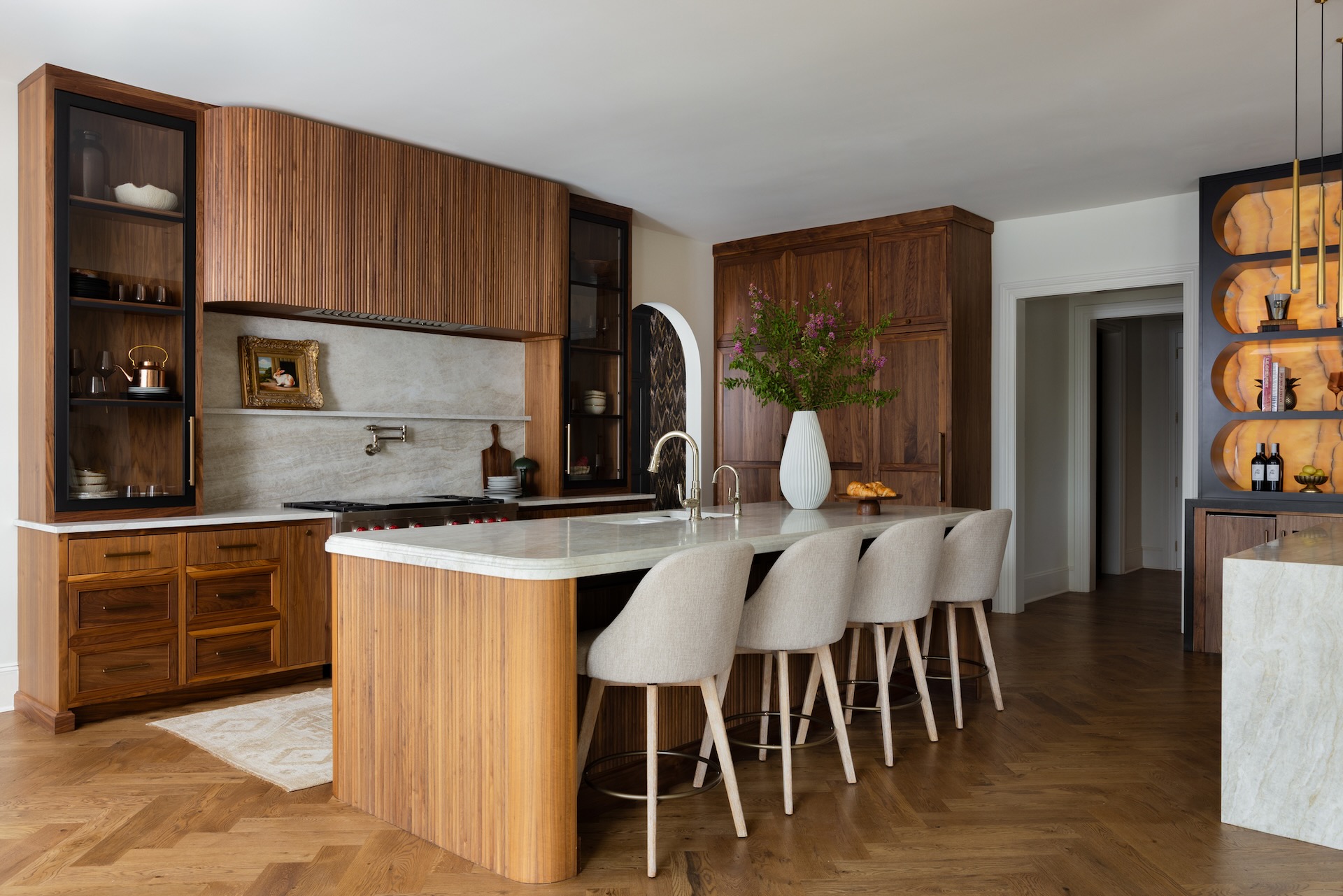
Specifically, the kitchen and adjacent bar boast a thoughtful mix of natural and refined materials. Warm walnut cabinetry (from Walker Woodworking) and appliance panels that conceal the refrigerator and freezer showcase a vertical grain pattern and combine with the rounded-edge, reeded ventilation hood surround to add depth and visual interest. The hood is flanked by glass-front cabinets with brass accents and black metal- framed doors that bring smooth contrast and structure.
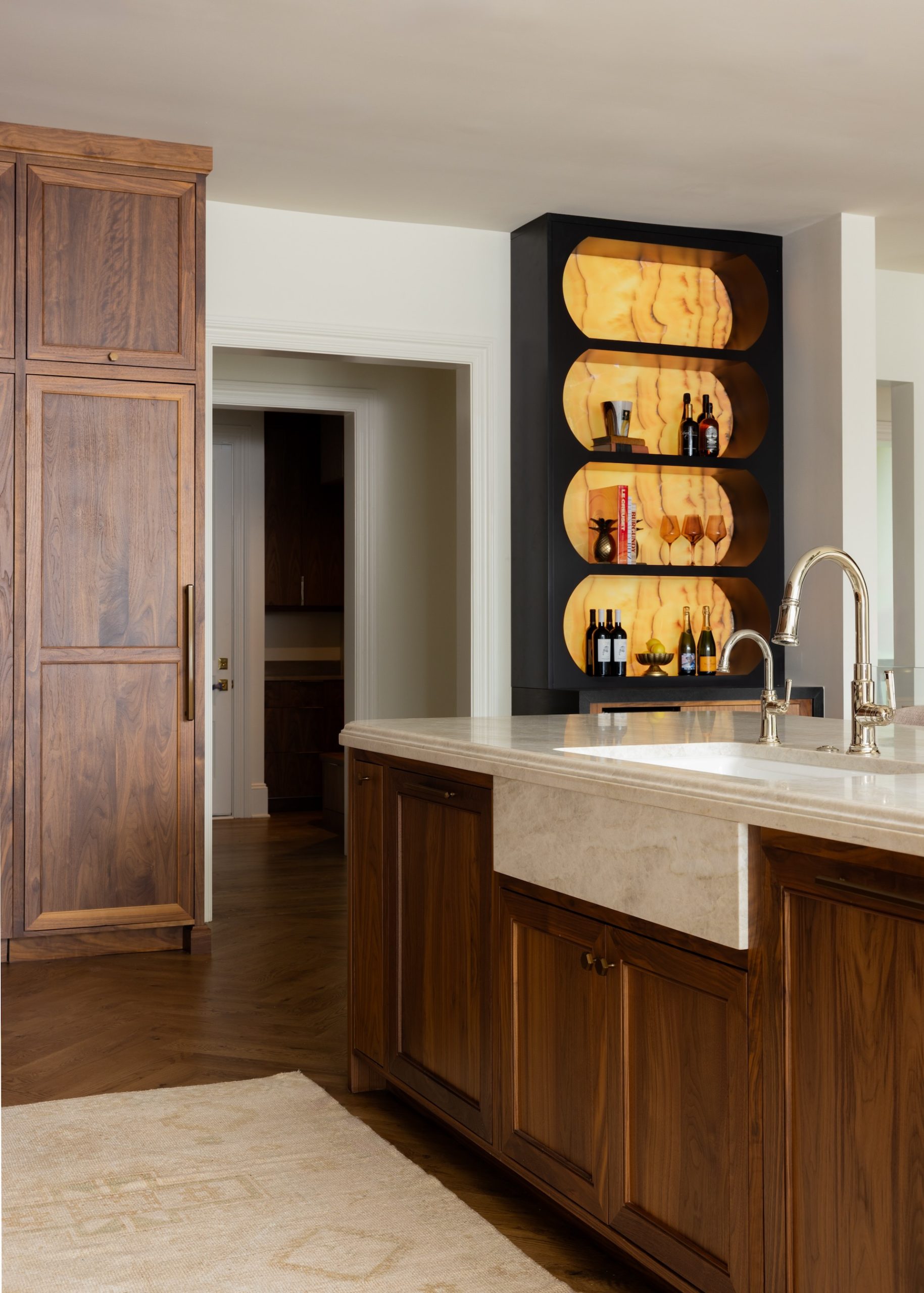
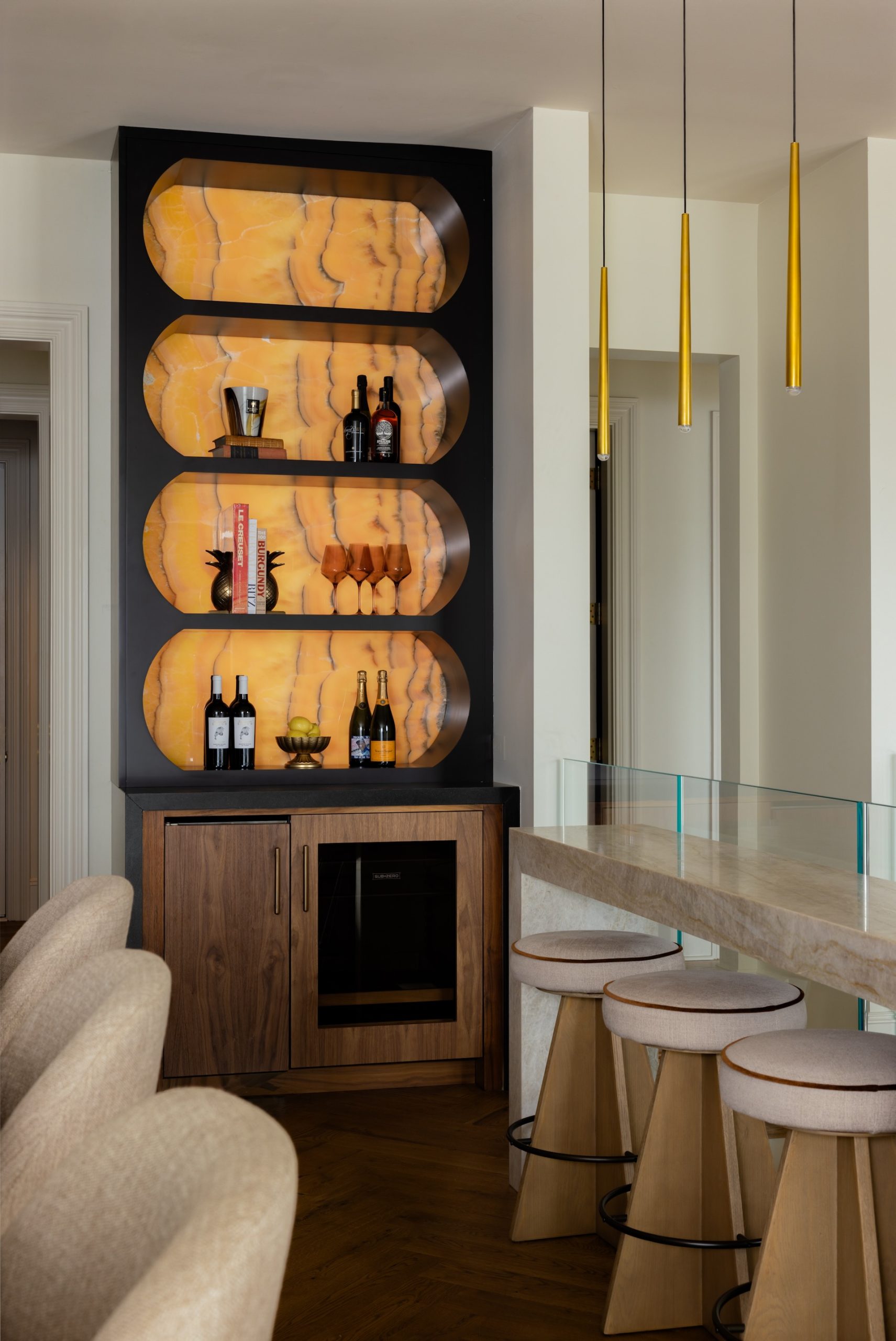
These ‘hard’ materials are combined with ‘soft’ textured features such as the upholstered bar stools that bring a cozy, tactile element and a vintage-style rug that introduces softness underfoot with its woven texture and muted tones that echo the stone and wood.
Additionally, the herringbone oak floors, backlit onyx backsplash in the bar and honed Taj Mahal quartzite countertops introduce organic movement and subtle veining. On the island, the natural stone features a 2″-thick ogee edge profile to soften the clean lines and add a subtle touch of craftsmanship. As well, the island’s gently rounded corners create a smooth, harmonious flow throughout the space, enhancing the kitchen’s refined modern look and its inviting, comfortable feel.
“This mix of soft and hard materials elevates the kitchen by creating a balanced, layered look,” she says. “The rich cabinetry, honed stone surfaces and herringbone floor provide structure, depth and timeless sophistication, while the upholstered stools and vintage rug add warmth and a lived-in feel. This thoughtful interplay of textures keeps the space from feeling cold or overly modern, blending craftsmanship with comfort to create a refined yet inviting kitchen that is both luxurious and approachable.”
Adding Depth
According to Jamie Morgan, owner/creative director of Blake and Dane in Oyster Bay Cove, NY, texture is the soul of a kitchen.
“It’s really the soul of any space,” she points out. “Texture adds depth and movement. Without it, a space feels flat and one dimensional. Texture is really what gives a room life. It creates contrast and balance, and it helps to tie in different materials in a natural way. Texture is what makes a space truly memorable.”
Creating a memorable kitchen was the goal for one recent renovation where Morgan’s clients had a strict request for anything but white or gray cabinetry.
“They wanted a fun, vibrant, whimsical feel to their kitchen, which is in a Tudor home in Garden City on Long Island,” she relates, noting a collaboration with Brandon James Construction. “Their community has a lot of old homes, so it was important to stay true to its roots.”
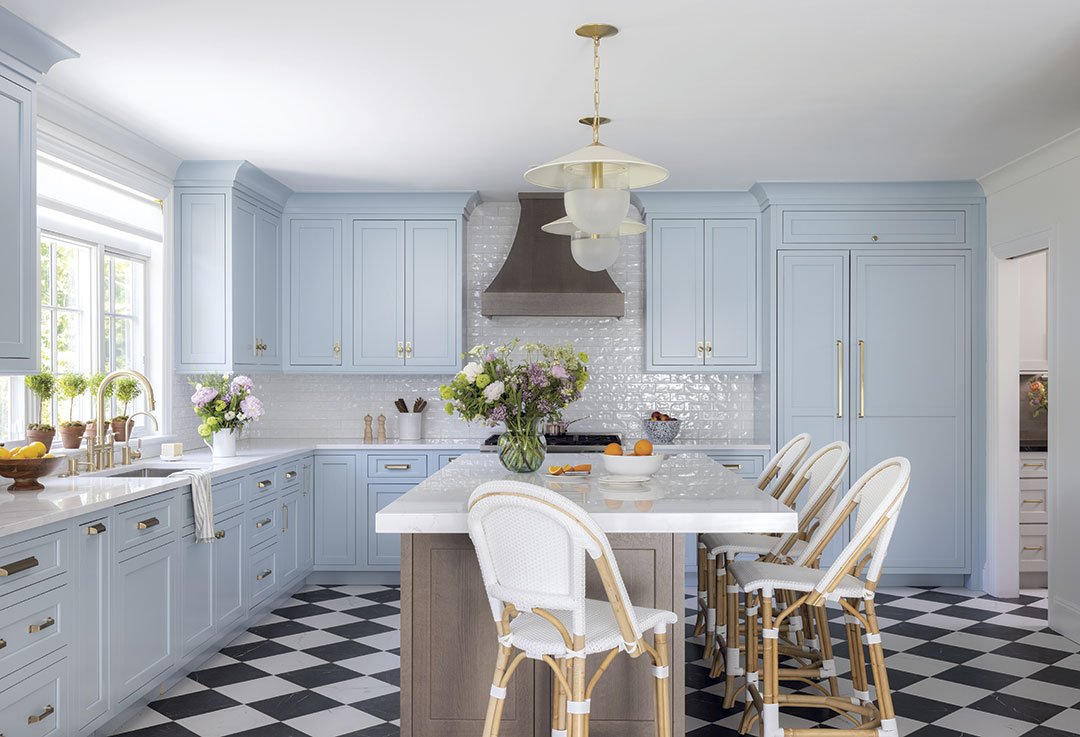
To accomplish that goal, Morgan based the kitchen on a traditional design style with a foundation of painted powder blue cabinetry.
“The design leans more traditional, but we had some fun with color to keep it more updated,” she explains.
Other like-minded design elements include a bold black and white floor comprised of porcelain tile laid in a classic checkerboard pattern and quartz countertops that mimic timeless marble, but in a material better suited to her clients’ lifestyle with three young kids.
Since these selections offer relatively quiet physical texture, the designer contrasted them with some tactile elements to create a curated and elevated design.
“In this case, a more highly textured backsplash becomes very important,” she says, in reference to the machine-made zellige porcelain tile that clads the window wall and serves as the backsplash behind the range. “I needed something that provided movement, and this tile catches the light so beautifully. It glistens, and it works really well with the white countertops and blue cabinetry.”
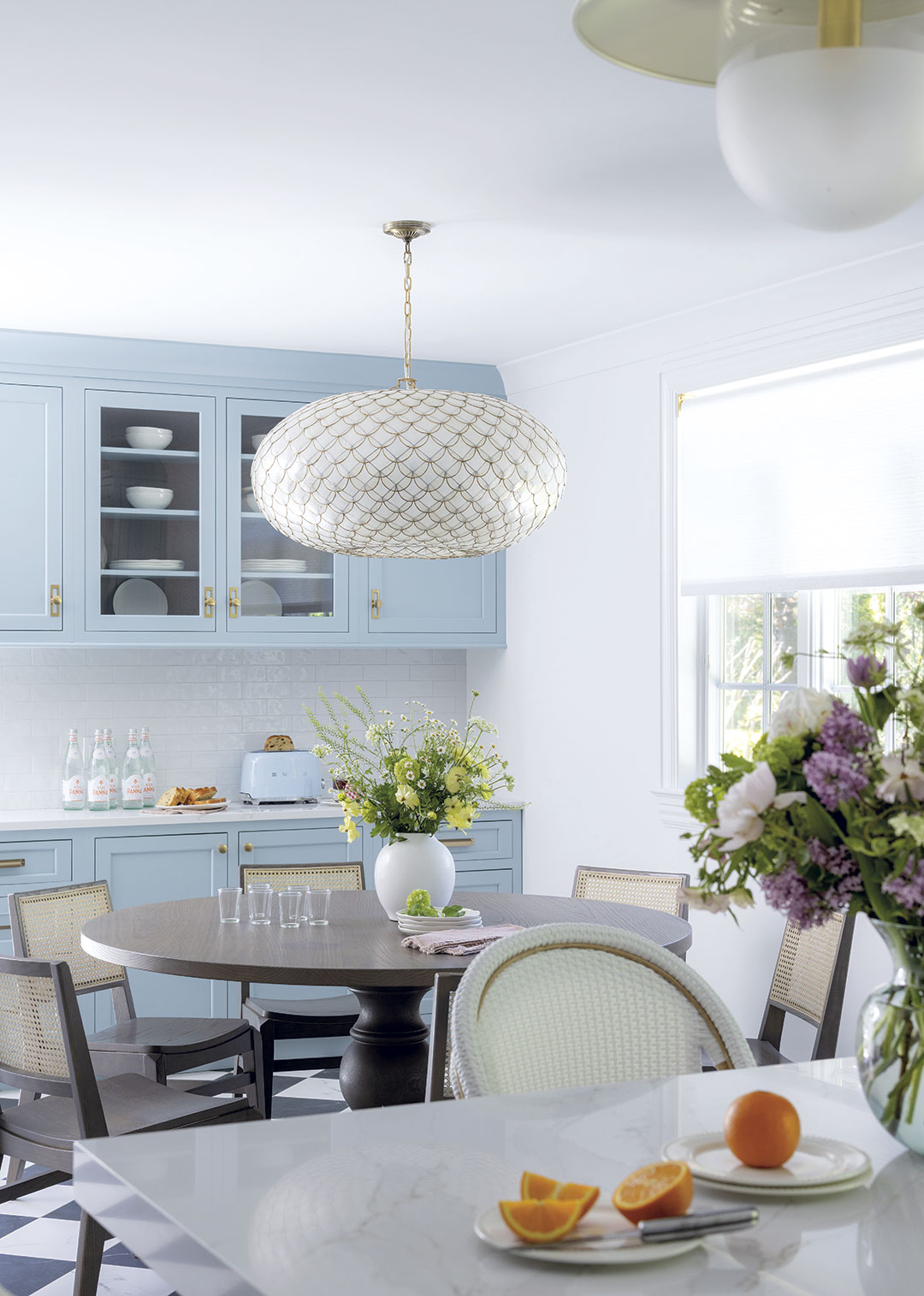
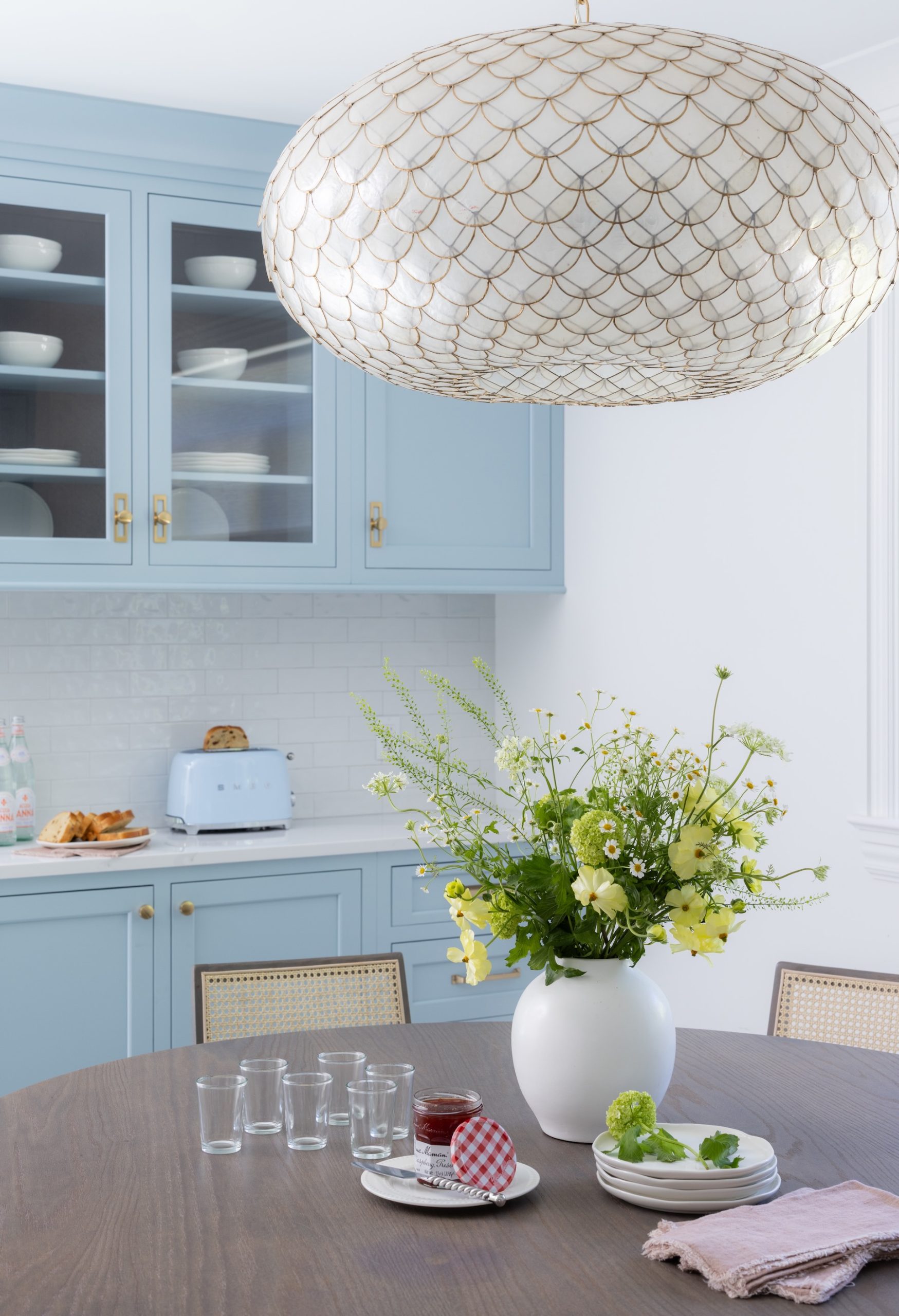
Morgan also brought in texture via the stained cherry ventilation hood surround and matching island, the latter of which is accompanied by heavily textured rattan stools. Directly behind the island sits a dining table with cane back chairs that provide seating for the family. A Capiz shell chandelier hovers above and offers a soft glow when illuminated. Additionally, more subtle texture is provided by the cabinetry hardware, which is a mix of brass knobs and pulls with understated nail head accents.
“It’s important to use a variety of textures within a room that come from several different sources, such as tile, countertops and even furniture,” she relates. “It creates an elevated design and keeps it visually interesting.
“In this kitchen, each element we chose creates a layered, cohesive look that is very intentional without being overdone,” the designer indicates. “On paper, describing this kitchen as a space with blue cabinets and a checkerboard floor may sound like it’s a bit much, but in reality, it’s a bright and airy space with personality and warmth…made all the more beautiful by the textural elements we included.”
link

:max_bytes(150000):strip_icc()/GettyImages-544347092-69d2e73c38f345a7baa16f89d6570186.jpg "This Kitchen Countertop Style Is So 2010s")